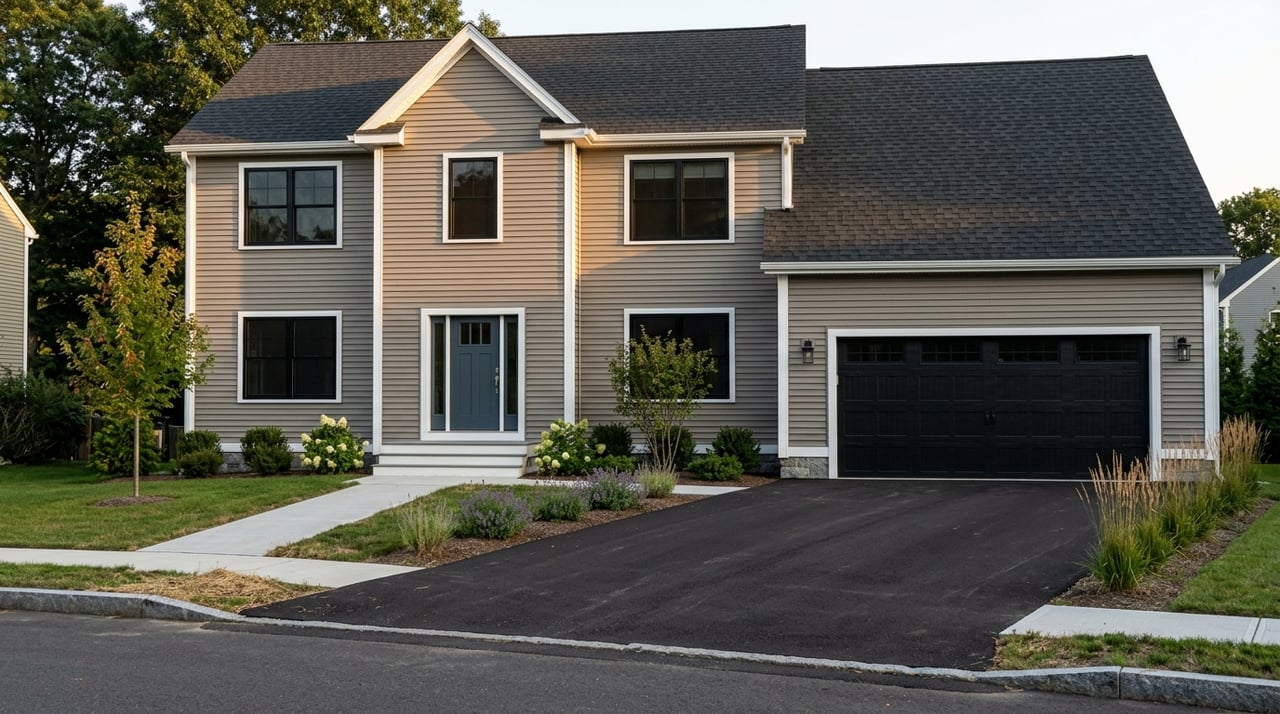
What to Know About New Construction Homes in Pelham NH
June 4, 2026
June 4, 2026
Thinking about a brand-new home in Pelham? You are not alone, but you may be surprised by how different new construction looks here compared with nearby markets. In Pelham, new builds are often tied to larger lots, private well and septic systems, and a longer approval path than many buyers expect. If you want to shop smart, this guide will help you understand what is available, what questions to ask, and how to plan for a smoother purchase. Let’s dive in.
Pelham has added housing over the last two decades, but the town still emphasizes rural character and open-space preservation. That helps explain why new construction here tends to be lower density and heavily focused on single-family homes.
As of late May 2026, active new-construction options appear limited. The examples visible online include a new colonial in Haystack Heights on a 1-acre lot with cul-de-sac access and community water and septic, along with larger custom-style homes on 5-acre and 8.99-acre lots.
In simple terms, Pelham’s new-build market often comes down to two paths. You may find a home in a planned subdivision, or you may find a larger-lot custom build with a more spread-out setting.
If you have been looking in other parts of Southern New Hampshire or Northern Massachusetts, Pelham may feel more spacious and less compact. That is not just a vibe. It reflects the town’s zoning framework and development rules.
For standard single-family development, Pelham requires a minimum lot size of 43,560 square feet and 200 feet of frontage. Those rules support a pattern of larger lots rather than tightly packed homes.
Pelham also has an open-space subdivision option. In these developments, projects must be single-family detached homes on parcels of at least 15 acres, and at least 40% of the parcel must remain open space.
Within that framework, the minimum building lot size can be 30,000 square feet with at least 125 feet of frontage on interior roads. The Planning Board may still require larger lots if site conditions like soils or ledge make that necessary.
In Pelham, a major subdivision is one that creates four or more lots, or involves new public or private streets, municipal facility extensions, or other public improvements. That matters because newer neighborhoods may come with more planning steps before a buyer ever sees a completed home.
Open-space subdivisions may also use private roads. In some cases, a homeowners’ association may be responsible for maintaining common areas, private roads, sidewalks, buildings, or utility facilities.
For you as a buyer, that means it is worth looking beyond the floor plan and finishes. You should also understand who maintains the road, what the shared obligations are, and whether the neighborhood includes open land or common areas.
Not every parcel in town fits current standards. Legal notices show recent variance requests for lots that do not meet today’s frontage or acreage rules.
That can be especially important with older or lake-area parcels. A property may work fine as a resale home today, but if you hope to rebuild, expand, or split the lot in the future, you may need additional approvals.
This is one reason new construction and land purchases in Pelham deserve careful file review. Lot lines, frontage, easements, well locations, septic plans, and driveway details can all affect your options later.
One of the most important things to understand about Pelham new construction is utilities. According to the town’s buyer FAQ, virtually all homes rely on private wells or individual water systems, and virtually all residences rely on private septic systems or, in some cases, community septic.
That means well and septic due diligence is not a minor detail. It is central to the purchase process.
Before a new home can be occupied, Pelham requires septic as-built and approval documents, plus a well test. The town says the well test is mandatory before a Certificate of Occupancy, the results are advisory, and buyers should expect a 2- to 4-week turnaround.
If you are comparing homes, utility setup can change the timeline and your comfort level. A home with community water or community septic may feel different from one with fully private systems, even if both are new.
Pelham is under the 2021 International Building Code and the 2020 National Electric Code. For new homes, the permit packet includes items such as a certified plot plan stamped by a New Hampshire licensed land surveyor and energy-code compliance documentation.
The town also requires an occupancy permit before move-in. That checklist includes final building, electrical, plumbing, and driveway inspections, along with the certified plot plan, septic documents, a blower-door test, well testing, and proper address posting.
Because there are several moving parts, timing matters. A new-construction purchase in Pelham can take months from contract to move-in, especially if approvals, utility work, or financing are still in progress.
Subdivision review can also add time before construction begins. The town says a typical subdivision is reviewed over 2 to 3 public meetings, often with site walks and public hearings.
When you are excited about a brand-new home, it is easy to focus on selections and upgrades. In Pelham, it is just as important to understand the status of the lot and the path to occupancy.
Here are some smart questions to ask early:
These questions can help you avoid surprises and compare properties more clearly.
Financing new construction can look different from buying an existing home. Buyers are often asked to make an upfront deposit, so it is wise to ask exactly when that deposit is refundable.
It is also smart to get preapproved and compare multiple lenders before you commit. You do not have to use a builder’s affiliated lender, and shopping your options can help you understand the full cost of the purchase.
If construction financing is involved, the process may become more complex. Construction loans are typically short-term loans that fund the build in stages as work progresses, and they can carry higher interest rates than permanent mortgages.
Some construction loans convert into permanent financing, while others may require you to reapply. Closing costs are also typically 2% to 5% of the purchase price before your down payment, so make sure your budget accounts for more than just the contract price.
For many buyers, the real decision is not just which new home to buy. It is whether new construction is the right fit compared with an existing home.
Here is a simple way to think about it:
| Option | Potential Advantages | Things to Watch |
|---|---|---|
| New construction | Current-code construction, less immediate repair uncertainty, modern layouts and systems | Longer timelines, deposit terms, unfinished neighborhood details, well/septic and occupancy timing |
| Existing home | Faster move-in, established setting, clearer picture of the property as it exists today | Older systems, possible repair needs, private water testing, and possible limits on nonconforming lots |
Existing homes in Pelham still require strong due diligence. The town advises buyers to test private water carefully before closing, and older lots may have constraints if you later want to rebuild, expand, or divide the property.
So while a new build may reduce some maintenance uncertainty, it does not remove the need for careful planning. The best choice depends on your timeline, budget, and comfort with the construction process.
If you are considering new construction in Pelham, a calm and informed approach will serve you well. Inventory is limited, lot and utility details matter, and timelines are rarely as simple as the brochure makes them sound.
A good plan is to start with your budget, confirm your financing path, and then dig into each lot’s approval and utility status. From there, you can compare homes based not only on style and price, but also on readiness, infrastructure, and long-term fit.
That kind of step-by-step approach is especially helpful if you are a first-time buyer or balancing the sale of your current home. New construction can be a great option in Pelham, but the strongest decisions usually come from asking the practical questions early.
If you are exploring new construction in Pelham and want local, straight-to-the-point guidance, O'Connell & Company Real Estate can help you compare options, understand the process, and move forward with confidence.


We offer ultimate privacy and security, speed, and efficiency. Our years of full-time experience have given us a clear understanding of the mindset of home buyers and sellers and a thorough understanding of the regional marketplace.